

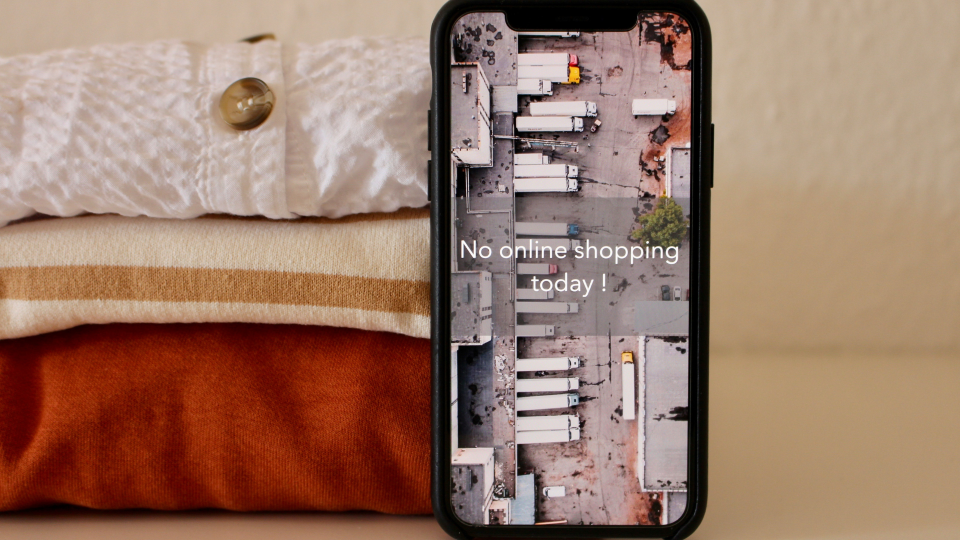
Photo by OneSave/Day on Unsplash.
With 80 billion pieces of clothing being produced every year, fashion remains a big part of content creation and influencer trends we see on the internet. Fast fashion brands like Shein and Zara have become household names because of the constantly changing fashion landscape. This overconsumption creates a cycle of continuous manufacturing and waste that has an impact on the environment as well as our lives. Fast fashion – a term used to describe mass production of trending clothing sold at low prices, is increasingly being called out for promoting overconsumption and its impact on the planet. For example, Shein produces 200,000 new products everyday which produced 9.17 million tonnes of carbon dioxide emissions (CO2e) in 2022 – about the same as 180 coal-fired power plants.
Content creators branding themselves as “sustainability advocates”, are calling out these fashion trends, and are creating awareness around the environmental and human impact of fast fashion, while advocating for making less harmful fashion choices through ‘Slow Fashion’.
However, slow fashion often comes with a price tag that consumers don’t always agree with or can hardly afford, making the advocacy of these content creators challenging each day. Yet it’s undeniable that social media is one of the top influences when it comes to helping people make lifestyle choices.
Sustainable Fashion “Trends”
The content creator industry is almost entirely based on either brand advertising or promoting lifestyle choices. Natalie Shehata, an “alternative educator”, and the co-host of sustainable fashion podcast Conscious Chatter, who aims to educate her online community about making slow lifestyle choices, says that she’s seen trends coming up within the sustainability space recently. “Broadly speaking, I think a lot of the sustainability space is copying trends from the fast fashion space. We have gained some traction and momentum in the last 3 years, and there is a focus on making sustainability trendy,” she says, adding that sustainability is not, and shouldn’t be a mere ‘trend’.
It can be difficult for these content creators to narrow down to one category because so many aspects within the sustainability space are interlinked. But for many others, fashion becomes a key focus within their work, both because fast fashion is now marketed and consumed online to a large extent, and because fashion is a branching out point.
Slow fashion often comes with a price tag that consumers don’t always agree with or can hardly afford, making the advocacy of these content creators challenging each day.
From a consumer’s perspective, sustainability fashion advocates introduce sustainable lifestyle choices. 83% of consumers believe that TikTok and Instagram are helpful places to find information about sustainability, and 75% of people are more likely to add sustainable behaviours to their lifestyle. Haya, a 25-year-old woman from Karachi shares that she’s recently started following content creators like Mashal Mush – a Pakistani slow fashion content creator, and Jennifer Wang – a Toronto-based content creator. “Both have helped me understand the value of consuming less, and also consuming more mindfully when it comes to fashion choices,” Haya says.
Research suggests that consumers are likely to see products more positively if they are endorsed by influencers. By using familiar language, social media trends like ‘underconsumption core’, where influencers talk about ways to reduce consumption, help users believe they can make similar choices as these influencers, leading to more environmentally conscious choices.
Many consumers who are making the shift to slower fashion choices use social media to find thrifting communities, or get involved in clothing swaps. “I found out about online renting pages through social media,” Haya says, adding that without social media she wouldn’t have been able to find community support for her new lifestyle choices.
But advocating for conscious fashion choices is not as easy as it seems. The average person buys 60% more items of clothing than they did 15 years ago, and only keeps them for half as long. With “buying” becoming such a major part of their fashion experience, consumers often look for ways to buy more in less money, which then promotes consumerism. Brands greenwash their products with terms like ‘recycled’, ‘eco-fabrics’, or ‘made sustainably’, to get consumers to feel that they are buying better, but critics have called these tactics “fast fashion in disguise”. While trending language is undoubtedly helping shift people’s attention to alternative options, it can also risk turning sustainable fashion into yet another trend, and advocates worry that will affect the way people see these lifestyle changes.
Greenwashing is often just marketing gimmicks, but many consumers believe these brands are the only alternative to fast fashion. Advocates point out that sustainable fashion is a mindset and a lifestyle choice, not something you can buy.
“If you're still shopping enmasse and not using [existing] pieces then you're still contributing to the problem,” says Kara Fabella, an ethical fashion advocate, personal stylist and content creator, when talking about how people have just shifted to buying ‘sustainable’ but not reducing their buying.
Through social media, the community Fabella is building online is accessible to consumers all over the world, and many people benefit from seeing sustainable fashion education online if they are unable to find physical communities to connect with.
But even for well-meaning consumers, it’s not easy, because so many brands and creators are co-opting that same language, which leads to the problem Fabella points out. “The education portion of sustainability is lost and people aren’t necessarily going out of their way to inform themselves, because of the greenwashing and buzzwords pushed to the forefront with corporations,” Fabella adds.
While trending language is undoubtedly helping shift people’s attention to alternative options, it can also risk turning sustainable fashion into yet another trend, and advocates worry that will affect the way people see these lifestyle changes.
South Asian Culture of Sustainability
There is an interesting contrast to traditional practices in countries like Pakistan, where clothes are passed on and recycled for generations, or given away directly to someone who can use them – making the process of second hand much more direct and more thought out. As recently as two generations ago, South Asians didn’t need social media ‘trends’ to tell them that their clothes could last for longer than a season.
Fast fashion is relatively new to South Asia, and rural lifestyles often still maintain inherently sustainable practices. Age-old crafts and textile techniques have lasted throughout generations, and older women will often have trunks full of timeless pieces that are passed down from mother to daughter to granddaughter. Value for fashion and its meaning has long been entrenched within South Asian identity, and within many other communities across the Global South.
This is now being realised and brought to light by sustainability bloggers, especially women of colour, who draw from their own cultures and traditions to inform their modern way of raising awareness. It’s when these advocates use digital platforms to go back and connect to these traditions and cultures, and really showcase sustainable fashion mindsets as opposed to creating more clickbait, that they are truly able to connect with a small but growing community.
Sustainability With A Price Tag
Paula Mugabi, author and sustainable fashion blogger, says, “Fast fashion has skewed how much people are willing to spend on fashion. Now everything seems too expensive because they’ve gotten accustomed to extremely low prices.” She adds, "The clothes you already own are your most sustainable clothes [so] start there.”
Owing to the high prices of some slow fashion brands, many are suggesting thrifting as an alternative to re-up your wardrobe without becoming part of buying new, and is also a great way of giving old clothes a new life.
“Clothes swaps are big in my city [San Francisco], so that’s a great way of getting good quality pieces but also it’s important to find like minded people. Thrifting has been gentrified a bit, but there’s different avenues, like By Rotation, a peer-to-peer rental app for occasion wear,” Fabella says.
She advocates for more personal community efforts because thrifting stores aren’t always the answer. Cheaply made garments won’t last long and will end up in landfills regardless, and with so many clothing items in circulation, even stores like Goodwill aren’t able to sell all of them.
The textile industry contributes to 10% of all carbon emissions worldwide, a major contributor to climate change and the disasters it has been causing in low income countries in particular. Despite countries like Pakistan, Kenya and Bangladesh having contributed the least to the climate crisis, they have been facing floods, droughts and drastic environmental changes that have left already vulnerable populations at risk of starvation and loss of homes and livelihoods.
Not only this, many of the fast fashion brands manufacture their products in these countries through underpaid workers forced to work in unsafe environments in sweatshops to justify low price tags.
The clothes you already own are your most sustainable clothes [so] start there.
What’s important though, is creating awareness and conversation around the real-life cost of these low price tags that we see in fast fashion stores. “Fast fashion is not cheap and not affordable, it costs us people and the planet. It’s ruining our waterways, people are dying, and you can't just buy your way into sustainability. We see a price tag in the Global North but what’s the story behind that,” Shehata says, referring to how fast fashion brands outsource production to low-paid workers in Global South countries and contribute significantly to environmental waste in the process. But because behavioural change takes far longer, and takes a lot more effort than simply clicking on a link on Instagram or TikTok, advocates like Shehata who focus on education and community building find themselves compromising on numbers to keep up the quality of their work. “You can't just buy your way into sustainability. It’s not a product, it’s a practice that is rooted in values. And that’s not always the popular choice because ultra fast fashion tells us that we constantly need more stuff to be relevant, which plays on self worth and belonging, and we need to resist this as individuals for collective liberation.”
Mugabi adds that while sustainability communities online may be small, they are effective. “Social media is a great place for them to be educated about this. There are many sustainable fashion and thrifting bloggers. People have created great communities that they can join,” she shares.
By modelling sustainable buying behaviours, digital platforms become a great way to amplify alternative lifestyles for these content creators, which provides an interesting contrast to the posts on fashion “hauls” that are frequent on social media feeds. Consumers have started caring about sustainability, but it can both be a lack of understanding of sustainability, and a lack of means to implement it that is hindering widespread change.
Fabella, Shehata and Mugabi have all managed to form communities around their work and are seeing change around them. Social media is changing, consumers are demanding a more personal insight in a world full of endlessly curated content, and as broadcast communities and other more interactive community options come to light, they may just be the push sustainability needs online to really connect with consumers.
- 762 views




Add new comment