
Image courtesy: CIPESA
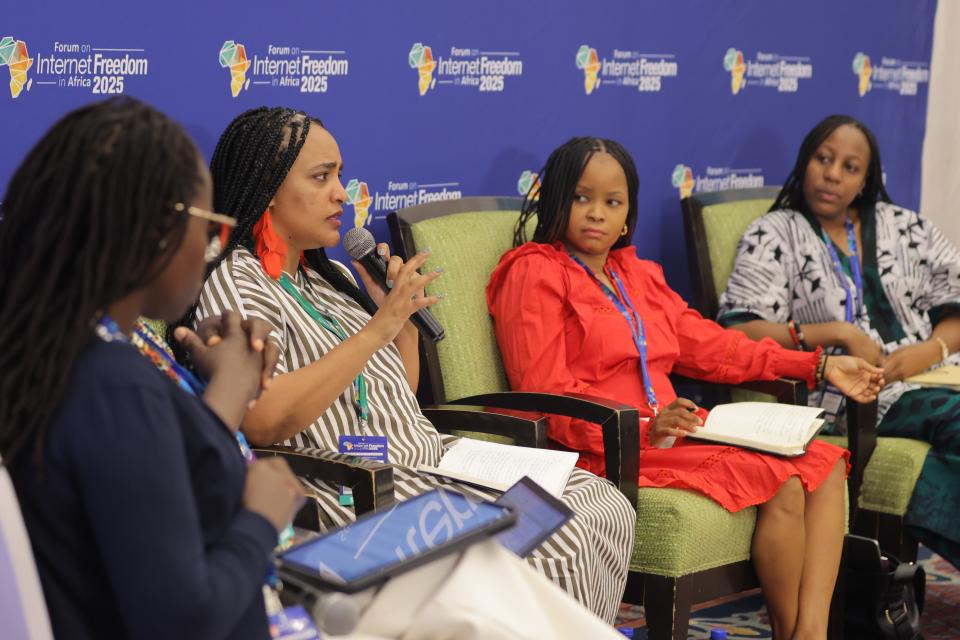
Gendered disinformation (GD) has become an increasing form of technology-facilitated gender-based violence (TFGBV) affecting women and gender-diverse human rights defenders, activists, politicians, and journalists. As an escalating form of online gender backlash, it is increasingly being used to undermine feminist achievements and impede progress toward gender equality. The Association for Progressive Communications (APC), in collaboration with partners in Africa and beyond, has adopted human rights approaches through evidence-based research, capacity-building initiatives, and policy advocacy to address the impacts of GD and uphold the human rights of the affected communities. APC and its partners organised a panel discussion during the Forum for Internet Freedom in Africa (FIFAfrica) 2025 in Windhoek, Namibia, where they explored research findings on gendered disinformation, examined collective strategies adopted, and reviewed existing legal frameworks aimed at addressing GD, especially in the context of elections, protests, war, and civil unrest in Africa.
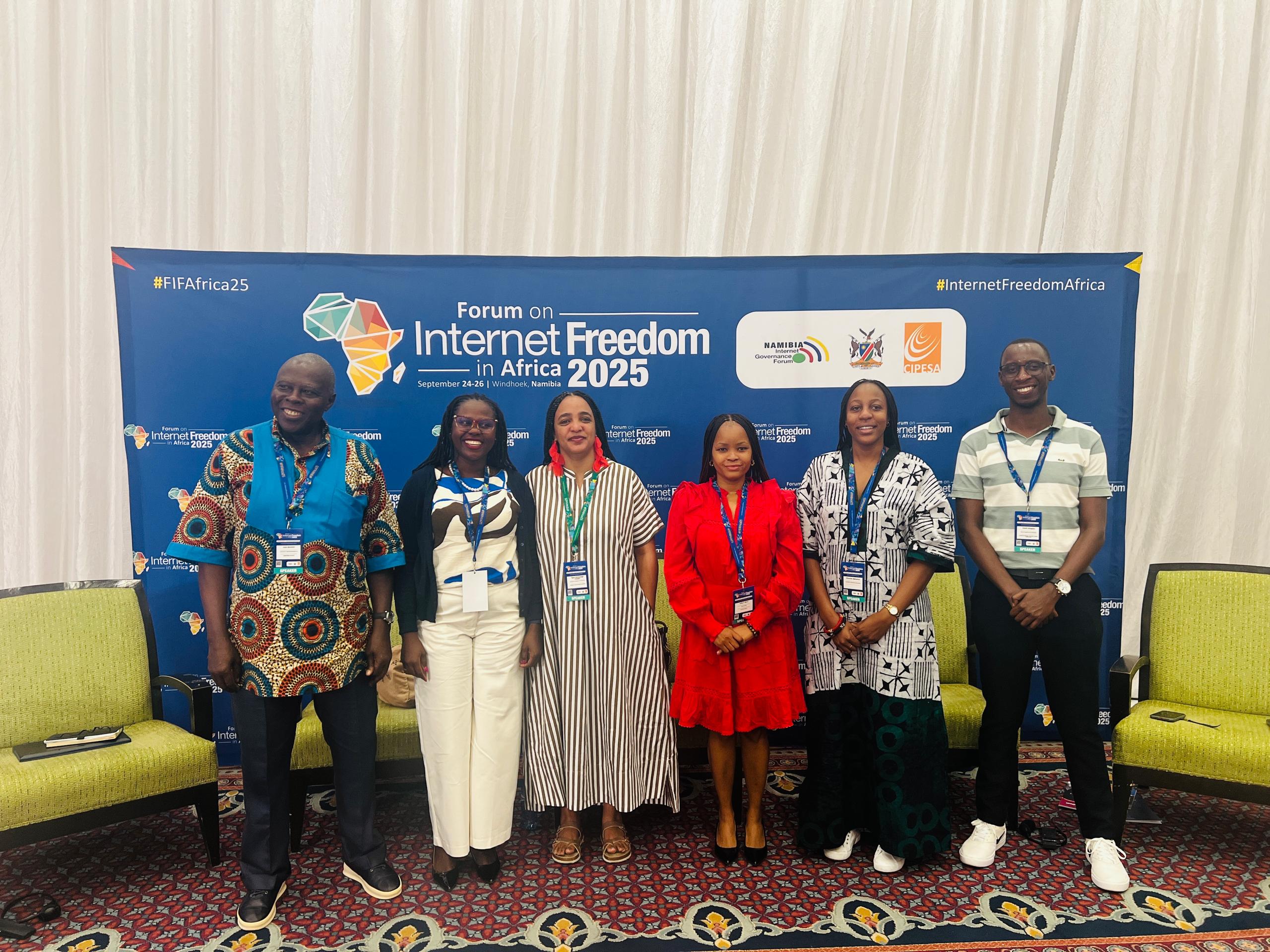
Photo of the panellists at FIFAfrica 2025 in Namibia. By Sandra Aceng
Political instability through disinformation
During the session, Zaituni Njovu from the Zaina Foundation explained that GD in Tanzania directly impacts journalists, activists, and politicians. She said, “Ahead of elections in Tanzania, which will be held on 29 October 2025, people are using gendered disinformation or information disorder to scare women from entering politics and to weaken democracy.”
In Cameroon, Avis Momeni, a Digital Rights Advocate from PROTEGE QV, noted that there is no specific law on freedom of expression or disinformation in the country. However, PROTEGE QV has documented cases of gendered disinformation. In the days leading up to the presidential elections that happened on 12 October, Avis highlighted that women in politics continued to face gender-based tactics and attacks. He strongly advised the creation of collectively designed “community practices and guidelines” to help social media users understand the dynamics of the online world. It is not enough to rely on the information and community guidelines provided by social media companies, as they have repeatedly proven ineffective and are often unresponsive to urgent threats arising from misinformation and disinformation.
Shamiso Mahomva from the Association for Progressive Communications, who works with women human rights defenders (WHRDs), highlighted the linguistic injustices on platforms that favour specific languages and render others, particularly African languages, invisible. Language injustice remains a significant gap, but alternative platforms are available for sharing stories. Shamiso added that, in addition to dealing with foreign languages, the terminologies we develop, such as ‘gendered disinformation’ or ‘technology-facilitated gender-based violence’, can be complex and not easily accessible to the wider community we aim to engage. She suggested that, as much as we strive for affordable connectivity, we also need language justice and simpler phrasing for these complicated issues we hope to bring to mainstream attention.
As much as we strive for affordable connectivity, we also need language justice and simpler phrasing for these complicated issues we hope to bring to mainstream attention.
Feminist Research to Challenge Gendered Disinformation
Tigist Shewarega Hussen, Research Lead for the Feminist Internet Research Network at the Association for Progressive Communications, discussed the role of feminist research in countering gendered disinformation. She stated that feminist research plays a crucial role in highlighting issues of activism. It emphasises inequalities based on gender, race, and socioeconomic class. It also helps build momentum for activists, provides evidence to inform policy or law-making, and sometimes challenges existing laws. Feminists have made significant contributions by fostering regional conversations and collecting data. The ongoing discussion about gendered disinformation, even the phrasing of “gendered disinformation” that expands the discourse of misinformation and disinformation, has been driven by feminists. She mentioned The Full Picture campaign, which tackles disinformation under the Our Voices, Our Futures project, and is especially effective in countering gendered disinformation.
Additionally, she referenced cases of xenophobia in Egypt against migrants from Sudan, where a government-led campaign targeted migrants, especially Black migrants, blaming them for the socioeconomic problems in the country. Similar misinformation and disinformation campaigns against migrants are consistent in South Africa, especially during election periods. South African feminists and human rights advocates have indicated that xenophobic attacks are primarily directed at Black and other African migrants, linking the issue to race and “afrophobia.” The pervasive claims that “migrants are taking our jobs” and “our economy is bad because of the migrants” are becoming some of the most prominent forms of xenophobic explanations in Europe as well.
By bringing the case of xenophobia in the context of misinformation and disinformation, Tigist’s intervention was to decenter politicians and journalists as the centre of the misinformation and disinformation subject of research and criticism, but to broaden research to include the impact on communities in our daily lives, provide more context to understand its effects, and be more inclusive.
She emphasised the importance of raising awareness about gendered disinformation or misinformation among key figures in journalism and politics. She also highlighted the need to understand the impact of such information in contexts that often sideline or invisibilise victims and survivors of online violence, particularly during elections, such as in the case of xenophobia. Additionally, she stressed the necessity of documenting what is happening both offline in communities and beyond just social media narratives.
From Research to Resistance
David Iribagiza, Programme Manager for Information Sharing & Networking at Women Of Uganda Network (WOUGNET), discussed the collective action strategies needed to address gendered disinformation, drawing on WOUGNET's experience in this area. He explained that evidence-based feminist research supports collective efforts by guiding interventions, such as capacity building and policy advocacy. Promoting platform accountability and leveraging existing laws are crucial, along with modernising content flagging tools. He highlighted how Grok – Twitter’s AI agent amplifying gendered disinformation – exemplifies the lack of platform accountability. David emphasised the importance of advocating for rights-respecting policies, especially given that current election laws, such as those for presidential and parliamentary races, fail to incorporate gender perspectives and require amendments.
Promoting platform accountability and leveraging existing laws are crucial, along with modernising content flagging tools.
He also noted that with Ugandan President Yoweri Museveni's upcoming January 2026 election campaign under the slogan "protecting the gains”, the country’s politics continues to reflect gender biases. Affirmative action measures like reserved seats for women in parliament aim to ensure women's representation, but gendered disinformation affects women’s participation in politics.
David shared that influencers on social media play a significant role in amplifying gendered disinformation, targeting women in public life and also those supporting political figures. WOUGNET's research revealed many cases of violence linked to gendered disinformation, such as the false claims about journalist Agatha Atuhaire, distracting from her professional contributions.
To counter the increasing cases of gendered disinformation, collective actions for civil society and state actors include conducting feminist research to dismantle myths surrounding false information, as well as informing capacity-building efforts and policy development. Promoting platform accountability is also essential, as demonstrated by a legal challenge against tech giant Google by four Ugandan digital rights activists for data privacy violations, which resulted in a court order in favour of the activists. The case is currently on appeal.
David stressed that enforcing existing laws is necessary to address issues such as content moderation, especially on social media platforms that fail to filter or contextualise local-language content. He said that when there is no proper accountability platform, such issues tend to emerge, especially during elections, where they can be exploited against female politicians. David mentioned that false claims, such as posting or distributing manufactured intimate pictures of women, could be used maliciously.
He emphasised the importance of advocating for policies that respect rights. He pointed out that while existing laws criminalise the dissemination of false information that harms reputations, they lack a gender perspective and disproportionately affect women and girls. He noted that the fines are minimal at only USD 68, and called for amendments to make the policies more effective and protective.
To counter the increasing cases of gendered disinformation, collective actions for civil society and state actors include conducting feminist research to dismantle myths surrounding false information, as well as informing capacity-building efforts and policy development.
Voices Across Borders
During the Question and Answer session, a Namibian researcher highlighted the lack of primary data on online violence against women in Namibia, emphasising the need for better data collection to support awareness and advocacy. A participant from Malawi pointed out that cultural norms heavily influence gendered disinformation, sharing experiences of online attacks and body shaming faced by women in politics and media, and noting societal attitudes that silence women. A Zimbabwean participant raised concerns about gender based violence targeting women journalists, focusing on stereotypes and doubts about their qualifications or political ties, and stressed the importance of addressing online harassment in media workplaces. A Kenyan participant discussed research on gender-based violence among Indigenous women defenders, and called for strategies to empower women online, despite traditional beliefs that limit their decision-making roles. She urged women to be more vocal and take an active role.
The panellists agreed on the need for increased research and advocacy across the continent, as only a few African countries are currently developing laws and regulations that suit the local context. They emphasised that engagement with governments is crucial, especially since some perpetrators are officials using platforms for propaganda and disinformation, impacting communities and vulnerable groups like LGBT individuals.
Sheena Magenya from APC, along with a Nigerian participant, reflected on how the NGO sector's lack of coordination hampers progress and emphasised the need for more cooperation. A participant with hearing impairment noted that many deaf people are unfamiliar with terms such as ChatGPT, AI, and Meta, which require awareness and research. She stressed the importance of sharing technological knowledge in ways that are accessible, and involving people with disabilities in political processes to address their feelings of exclusion. Whereas, an Ethiopian participant discussed using technology to preserve survivors' stories and improve access for vulnerable groups like Internally Displaced Persons (IDPs).
A Ugandan participant inquired about the differences in responses from perpetrators and activists regarding the fine line between victims and perpetrators. At the same time, Sheena from APC cautioned that civil society's silence can render them complicit. David stressed the importance of recognising that silence can turn civil society into perpetrators and encouraged ongoing reflection. He warned that without laws addressing gendered disinformation, activism may fail, and violence will persist. David emphasised accountability, noting that law enforcement often prosecutes high-profile figures for disinformation but releases them quickly, leaving citizens unprotected.
Gendered disinformation affects all genders and requires collective effort, especially during elections, involving both men and women, to challenge harmful narratives.
Two participants from Uganda shared insights on online violence and gendered disinformation, emphasising the need for contextual understanding. One pointed out that women can be both victims and perpetrators, and highlighted the challenge of combating disinformation before harm occurs, noting coded language and local context in hate speech. Another emphasised the importance of capacity building in technology and AI, advocating for ongoing education to promote justice.
In the end, Zaituni from Tanzania added that gendered disinformation affects all genders and requires collective effort, especially during elections, involving both men and women, to challenge harmful narratives. Shamiso emphasised the importance of accessibility, inclusivity, and simplicity, particularly in Zimbabwe, where internet access is costly, especially in rural areas.
Avis, on the other hand, emphasised the need for clear laws to distinguish between facts and lies, as well as the importance of developing technical skills from primary school onward. Tigist discussed using technology to document survivors' stories, stressing the importance of memory in digital spaces given the risk of forgetting. She noted that some survivor stories, especially about sexual violence, emerged thanks to human rights organisations and resilient advocates despite attacks. She recommended collaborating with tech developers to create secure spaces for feminists to preserve their histories safely.
The discussion concluded with a highlight on the importance of cultural sensitivities, data-driven advocacy, and community engagement in tackling gender-related online violence and disinformation across Africa.
- 139 views



Add new comment