

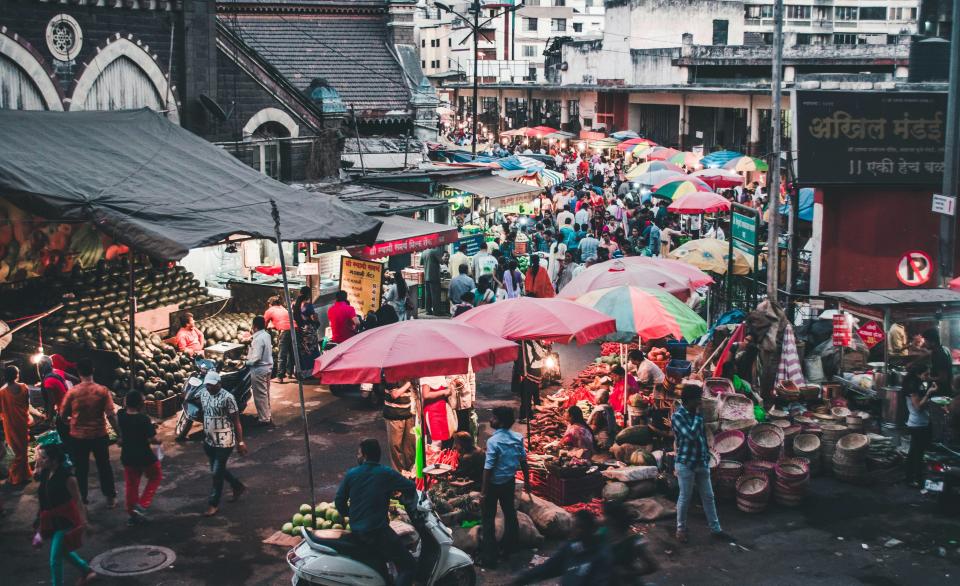
Photo by Atharva Tulsi on Unsplash
In 2024, a group of men from a large, countrywide NGO and network of men’s rights activists (MRAs) were seen burning underwear at a public protest in Pune. The protestors argued that various welfare schemes, including the annual payment of 100,000 rupees (approximately USD 1,200), to women from economically underprivileged families promised by India’s leading opposition party in its election manifesto was discrimination against men. So did the schemes that offered free or subsidised rides on public transport to all women. The money for women’s “freebies” is sourced from the taxes paid by men, they claimed. In addition, they declared that Article 15 of the Indian Constitution that prohibits discrimination by the state against any citizen on grounds of sex, among other protected characteristics, is meant to “terrorise men and boys”.
These are typical, reductionist, factually incorrect or logically flawed statements that MRAs put forth against complex and structural problems. Many social programs and research clearly suggest that women’s financial independence uplifts families and communities, which is tied to their free, easy and safe access to public transportation, and further enables them to invest in their family’s health and education.
MRAs in India contend that women abuse legal remedies and protections to harass, extort from or seek revenge from men and their families. These activists target women, gender rights organisations, feminists, male allies of women, DEI policies, and welfare systems available to women, claiming that complaints against them of domestic abuse, dowry harassment, sexual violence or harassment and in matters of divorce, alimony and child support, are false – generalisations that have repeatedly been refuted. When intermingled with other elements of the manosphere, such as incels, and certain political ideologies, this discourse became a force of gendered disinformation.
Male victimhood
The Indian manosphere’s discourse is that men are victims of a system rigged against them, and that women and feminism are to blame for men’s unemployment, social isolation or loneliness.
The FAQ section on the website of a large MRA organisation reads, “Most feminists are intellectually challenged individuals, with very less [sic] academic grounding. They are basically frustrated angry individuals, who think intolerance and hate will improve conditions of women in the world.” It also states, “The society is so treacherously anti-male that it treats men worse than animals.”.
Academic papers and reports by research organisations discuss how gendered disinformation in India is often fueled by organised campaigns, including those led by anti-feminist groups, to undermine women’s rights and portray men as victims of systemic bias. These campaigns frequently use misleading statistics and anecdotes to shift public perception and policy debates.
The Indian manosphere’s discourse is that men are victims of a system rigged against them, and that women and feminism are to blame for men’s unemployment, social isolation or loneliness.
Researchers Shreya Agarwal, Urvashi Patel and Joyojeet Pal, in their 2022 paper titled “The Indian anti-feminist movement on Twitter,” analysed tweets containing hashtags #MenToo, #LegalTerrorism and several others used by self-identified MRAs. One of their findings was that instances of class violence between male cab drivers, home delivery executives etc. and women customers of a higher economic class had become viral on social media. This content was typically branded as “gendered situations in which an entitled woman attacks a man with impunity.”
This discourse, along with the use of ironic jokes, memes and viral content, preys on young men's insecurities and frustrations by offering simplistic solutions through male supremacy ideologies and promoting false narratives of male victimhood. The recent Netflix film Adolescence also illustrates how the manosphere communities use pseudoscientific concepts like the "80/20 rule", and other anti-feminist narratives.
Dr. Paras Sharma, Ph.D, psychologist and Director at the mental health services organisation, The Alternative Story, notes, "Some influencers in India market themselves as 'mentors' while spouting a toxic mix of pseudo-psychology, anti-feminism, and nationalism, which are enticing because they resonate with the distorted realities of masculinity. I have seen men fall completely for such influencers because they see them as people who have 'figured it out' and 'seen through the lies'. Ironically, they think that those who are fact checking these influencers are actually the ones who are lying.”
The manosphere calls it the “red pill", a metaphor borrowed from the film The Matrix, where taking the red pill means awakening to a hidden reality.
Intersection with political ideologies
Several studies in different parts of the world have found an intersection and linkages between men’s rights activism/the manosphere as a whole, misogyny, right-wing extremist violence, and the rise of the far right. Politicians have been known to amplify such narratives to court MRA-aligned voters. One 2024 Australian study shows that men harbouring sentiments at an intersection of anti-feminism, the manosphere and right-wing extremism use “dis/misinformation to back their feelings of victimhood” and justify domestic violence, while an Indian study published the same year, finds gender and sexualised disinformation and online violence by “Hindutva ideologues” in online spaces.
In 2022, a 27-year-old girl, Shraddha Walker was murdered in Delhi by her boyfriend from another religion in an act of intimate partner violence. A coordinated online campaign by MRAs and pro-Hindutva voices cherry-picked the matter to denounce interfaith relationships and women’s right to choose a partner, blamed the victim for choosing an incorrect partner and leaving her natal family, and to emphasise the “virtues” and values of the “Indian family system”.
"Some influencers in India market themselves as ‘mentors’ while spouting a toxic mix of pseudo-psychology, anti-feminism, and nationalism, which are enticing because they resonate with the distorted realities of masculinity. I have seen men fall completely for such influencers because they see them as people who have 'figured it out' and 'seen through the lies'. Ironically, they think that those who are fact checking these influencers are actually the ones who are lying."
- Dr. Paras Sharma
Feminism in conflict with traditional Indian values
“We need a revolution… an armed revolution… If safeguards for men are not brought in quickly, then the Indian family system will collapse,” said the co-founder of the organisation that held the underwear-burning protest in 2024. MRAs consider feminism culturally alien, anti-Hindu, anti-Indian, and in direct conflict with traditional values, the “family system” and the “institution of marriage”. They refer to these family systems in heteronormative and mononormative terms, rejecting the existence of LGBTQIA+ persons, single mothers, chosen families, composite families, and those in non-traditional relationship arrangements such as polyamory. MRAs declare that Indian feminists are a foreign-funded lobby threatening Indian values.
The erstwhile Chief Justice of India, DY Chandrachud was targeted for his publicly-expressed views on gender justice. He is known for urging law students to "incorporate feminist thinking" in their legal practice. He has also supported legal reforms that, according to MRAs, made men more vulnerable to legal and social disadvantages in matters of divorce, child custody, and domestic violence. MRAs argued that his views, especially on issues of women’s agency, were biased against men and detrimental to the interests of Indian families. Twitter users also accused him of “embracing immoral and Westernised culture" and "destroying the fabric of Indian culture”. Researchers Agarwal et al observe that, “The anti-Chandrachud messages moved into a Hindutva discourse, presenting that his positions were not only feminist, but explicitly anti-Hindu.” Incidentally, Justice Chandrachud has called disinformation and hate speech a challenge to free speech.
The researchers also found that MRAs attacked vocal feminists and led coordinated activities to target them. MRAs try to argue that feminism leads to chaos and dysfunction, and use the example of the US as a “cautionary tale” to make feminism look bad in India.
Prateek Waghre, an independent technology policy researcher, says, “An emerging hypothesis is that this [gendered disinformation] is a consequence of the ’media consumption’ patterns of younger men. Research/ surveys are also now showing a greater ’gendered polarisation’ where young men tend to skew more conservative, and in some notable cases, like Germany, women lean left. This indicates that while it is not visible in the information sphere, there are deeper social and societal factors at play.” He adds, “In India, notable recent instances include the release of movies like “Mrs” or court proceedings on [criminalising] martial rape which resulted to significant activity from MRA groups, and escalating attacks on people, mostly women, who countered their positions.”
Solutions
Successive editions of the annual Global Risk Report have ranked misinformation and disinformation among the top five global risks in the short and long term for the world, and India among the top countries facing this risk. Pratik Sinha, co-founder and editor of the independent fact-checking platform AltNews has said that India is “the disinformation capital of the world”, a finding supported to various degrees by different studies. Some research studies have identified gendered disinformation as threats to democracy and national security.
An emerging hypothesis is that this [gendered disinformation] is a consequence of the ’media consumption’ patterns of younger men. Research/ surveys are also now showing a greater ’gendered polarisation’ where young men tend to skew more conservative, and in some notable cases, like Germany, women lean left. This indicates that while it is not visible in the information sphere, there are deeper social and societal factors at play.
- Prateek Waghre
Waghre adds, “Efforts to mitigate this sort of disinformation need to go beyond correction and punitive actions (which are likely to have limited corrective effects, and are used to claim victimisation), and will also need to rely on developing a greater understanding of the reasons of the appeal of ‘manosphere’ content and addressing those reasons, to the extent it is possible reframing them as not being a consequence of greater agency/choice for women, and through longer term sensitisation of young men.”
Dr Paras Sharma who facilitates men’s mental health and wellbeing support groups, echoes this, “The solution isn’t simply countering falsehoods; it involves addressing underlying emotions which make them believe these narratives in the first place. Listening to men talk freely in a shame-free environment like a support group allows honest expression, which starts dismantling the internalised ideas, and gradually allows to introduce newer perspectives.” He shares, “A significant part of my work centers on the emotional debt patriarchy incurs toward men, like the lack of connection and intimacy with other men. Blame and easy answers fill the emotional void, so we need to combine emotional literacy with critical media skills and community—places where men can be seen, supported, and challenged. It’s slow work, but it’s what actually shifts people.”
Some feminists suggest the media should stop reporting dis/misinformation from MRAs.
Tarunima Prabhakar, co-founder of Tattle, says, “When disinformation is wide-reaching and non-targeted, we can attempt fact-based counters while recognising that when we intervene and with what information we intervene is important. The challenge with countering narratives is that we risk amplifying the same narratives. In the early days of a narrative taking hold, when an issue hasn't become mainstream, it could be more effective to provide accurate information as a way of setting an agenda rather than debunking [misinformation].” Prabhakar adds, “Tactically, our goal is not to change the beliefs of the most extreme voices but to engage with those in the middle, and reduce the influence of the extreme voices on them. When disinformation becomes targeted, the most recent example being Himanshi Narwal’s experience, the imperative is to ensure the physical and psycho-social safety of the target.”
Prabhakar says that one person cannot counter troll armies, and so allies of those being targeted would have to mobilise and coordinate response, which would also help the victim feel less lonely in their experience. “Basically, we need to continuously humanise the victim, which also influences bystanders.”
Tactically, our goal is not to change the beliefs of the most extreme voices but to engage with those in the middle, and reduce the influence of the extreme voices on them. When disinformation becomes targeted, [...] the imperative is to ensure the physical and psycho-social safety of the target.
- Tarunima Prabhakar
Prof Joyojeet Pal, one of the researchers whose paper is extensively quoted in this article, says that men must step up to counter MRAs’ hateful content. He adds, “It is also incumbent upon more influencers, politicians, and average citizens on social media to call out bad behavior instead of assuming it will lead to trolling.”
Filmmaker Paromita Vohra writes that the prevailing discussion on toxic masculinity often overlooks the aspects of caste, race, market forces or success-driven education and social life. It also allows men who identify as progressive to distance themselves from “other men” and “from examining how they fulfill a manly culture in their own genteel ways.” She adds, “It also creates a reasonable impatience in women who feel that they are yet again being asked to service the well-being of men when society has barely begun to attend to women’s realities.”
A recent report for preventing technology-facilitated gender-based violence at its source suggests behaviour-focused interventions and design solutions. Some of those, such as “nudging users to reconsider harmful behaviour” could potentially prevent or reduce the tide of disinformation that happens in the form of online attacks on individuals or groups.
We also need more research that establishes causal links between online gendered disinformation by MRAs and other manosphere elements and real-world, offline harm, along with meaningful support structures and social change for vulnerable men who have real challenges.
- 933 views




Add new comment